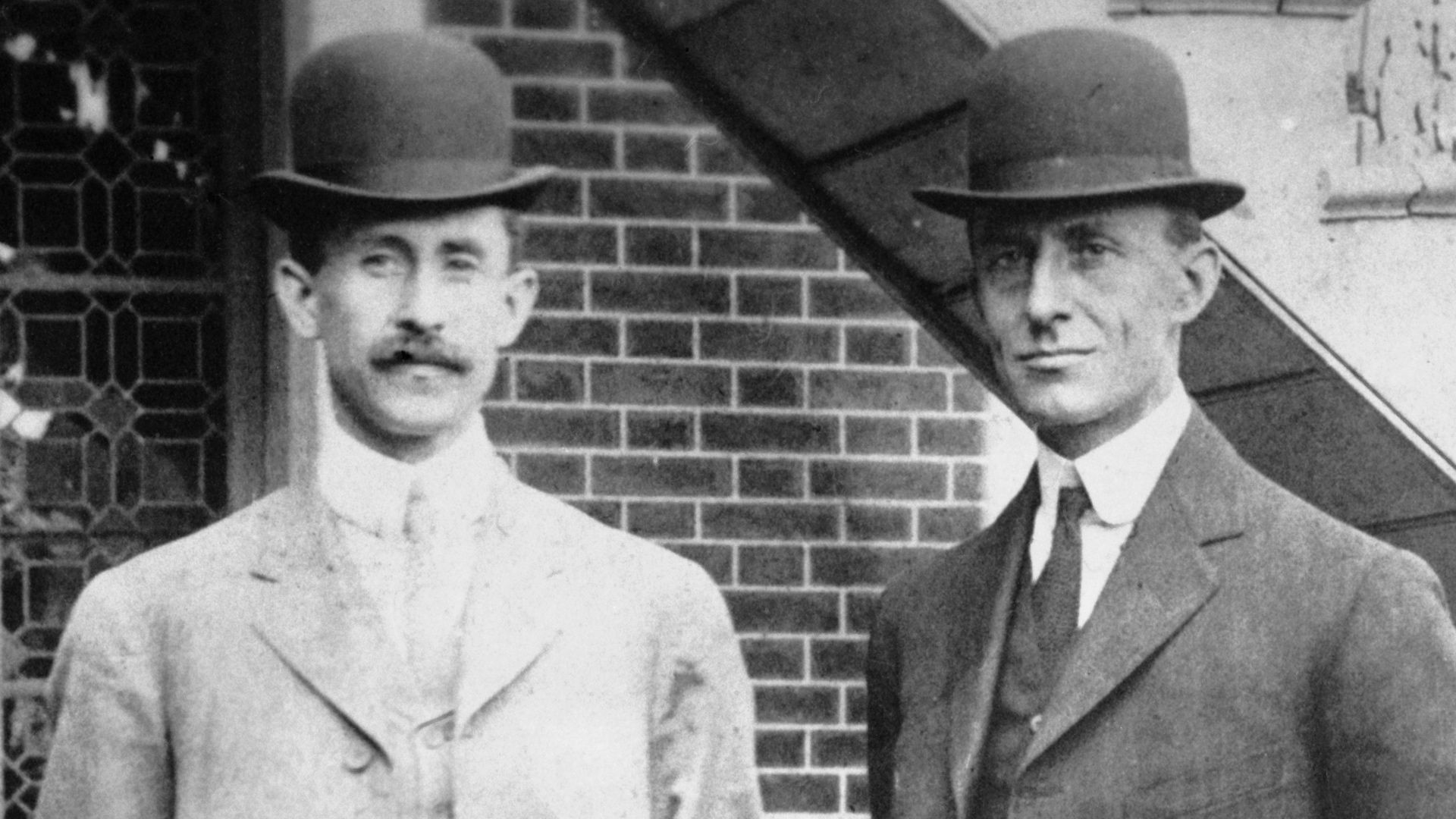
Minds Behind the Machines: The Wright Brothers
On a windswept beach in Kitty Hawk, North Carolina, on December 17, 1903, Orville Wright lay prone on the lower wing of a wooden contraption that would change the world forever. For twelve seconds, the Wright Flyer defied gravity, carrying humanity into the age of aviation. But this historic moment was the culmination of years of methodical engineering, not a stroke of luck.
The Bicycle Shop Experimenters
Wilbur Wright (1867-1912) and Orville Wright (1871-1948) began their journey to flight in an unlikely place: their bicycle repair shop in Dayton, Ohio. The brothers possessed complementary skills that proved essential to their success. Wilbur, the elder by four years, was the visionary and theorist, while Orville excelled at hands-on mechanical work and precision craftsmanship.
What set the Wright Brothers apart from other aviation pioneers was their systematic approach to solving the problem of flight. While others focused primarily on building more powerful engines, the Wrights understood that the fundamental challenge lay in control. They identified three critical axes of movement: pitch (nose up and down), roll (wing tip to wing tip), and yaw (nose left and right).
Engineering Through Experimentation
The brothers' path to success was paved with meticulous experimentation. They built a wind tunnel in their shop—a simple but revolutionary tool that allowed them to test over 200 wing designs. This methodical approach revealed that much of the existing aerodynamic data was incorrect, forcing them to develop their own calculations and theories.
Their innovation extended beyond aerodynamics to control systems. They developed a three-axis control system using wing warping for roll control, a movable rudder for yaw, and an elevator for pitch. This system, inspired partly by their observation of birds in flight and their experience balancing bicycles, gave pilots unprecedented control over their aircraft.
Perhaps most remarkably, the Wright Brothers achieved powered flight using an engine that produced only 12 horsepower—far less than what aviation experts believed necessary. They succeeded because they understood that efficient design mattered more than raw power.
The Scientific Method in Practice
The Wright Brothers approached aviation as scientists, not just inventors. Before attempting powered flight, they spent three years flying gliders at Kitty Hawk, carefully documenting each test flight. They recorded wind speeds, flight distances, and control responses, building a comprehensive database of aerodynamic knowledge.
Their 1902 glider incorporated all their accumulated knowledge and became the foundation for their powered aircraft. Unlike previous aviation attempts based on intuition or copied from birds, the Wright Flyer was the product of systematic research and engineering.
The brothers also recognized the importance of pilot training. While other aviation pioneers focused solely on building flying machines, the Wrights understood that successful flight required skilled operators. They spent countless hours practicing with their gliders, developing the muscle memory and reflexes necessary to control an aircraft in three dimensions.
Beyond the First Flight
The Wright Brothers' contributions extended far beyond that first twelve-second flight. They continued refining their designs, achieving flights of over 30 minutes by 1905. Their 1905 Wright Flyer III was the world's first practical airplane, capable of taking off, flying for extended periods, and landing safely.
More importantly, they established the fundamental principles of aircraft design that remain relevant today. Their understanding of control systems, aerodynamics, and the relationship between power and efficiency laid the groundwork for the entire aviation industry.
Legacy of Innovation
The Wright Brothers' approach to innovation—systematic experimentation, iterative improvement, and unwavering persistence—established methodologies that continue to drive technological progress today. They demonstrated that breakthrough innovation requires not just inspiration but disciplined scientific inquiry and methodical testing.
Their story reminds us that the greatest technological advances often come from sustained, methodical effort rather than sudden flashes of genius. They approached an impossible problem with scientific rigor while maintaining the boldness to attempt what others deemed fantasy.
The machines created by these pioneering minds launched an entire industry and fundamentally changed human experience. The Wright Brothers' airplane shrank the world, making global travel and commerce possible on an unprecedented scale. Their legacy extends beyond aviation to encompass a way of thinking about problems and solutions that continues to inspire engineers and innovators worldwide.
In studying their methods, we learn timeless principles about transforming vision into reality through patience, precision, and unwavering determination.